
How to Select a Replacement Brake or Clutch: A Cross-Reference Guide
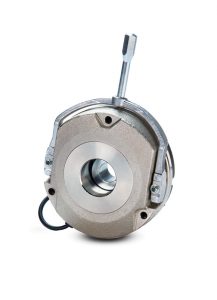

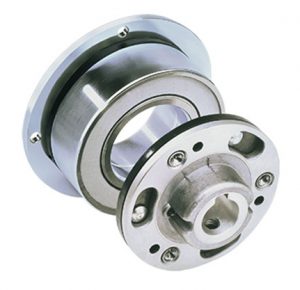
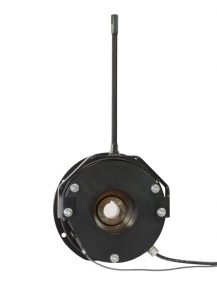
When an industrial brake or clutch fails, replacing it is not always as simple as ordering the same part again. The original component may be discontinued, the manufacturer may no longer offer the same configuration, or the machine’s operating requirements may have changed since the brake or clutch was originally selected. Normal wear, overheating, contamination, electrical failure, and increased machine speeds or cycle rates can all lead engineers to search for a replacement.

For engineers replacing a brake or clutch from another manufacturer, the goal is not necessarily to find an identical component. The better approach is to identify the function and specifications of the existing component, then select a replacement that meets those requirements while fitting the machine.
KEB America, Inc. offers a range of electromagnetic brakes, permanent magnet brakes, clutches, and clutch-brake combinations that can be configured for a variety of industrial applications. This guide outlines what to look for when replacing an existing brake or clutch and how to determine which KEB solution may be the right fit.

Start With the Existing Brake or Clutch
Before selecting a replacement, gather as much information as possible about the existing component. The manufacturer’s name and part number are useful starting points, but a part number alone may not tell the entire story.
Look for the following specifications on the component, nameplate, machine drawings, or original documentation:
• Brake or clutch function: Is it used to stop, hold, engage, disengage, or transfer torque?
• Operating principle: Is it power-off, power-on, or permanent magnet?
• Rated torque: How much torque does the application require?
• Operating speed: What RPM does the component experience?
• Coil voltage: What voltage is supplied to the electromagnetic coil?
• Mounting configuration: How is the component attached to the motor, shaft, or machine?
• Bore and shaft dimensions: Check shaft diameter, bore, keyway, and hub configuration.
• Overall dimensions: Consider the available installation space.
• Duty cycle: How frequently does the brake or clutch engage?
• Environment: Is the component exposed to heat, dust, moisture, oil, or washdown conditions?
Photos can also be valuable, particularly when the original part number is unavailable. A photo of the nameplate, the entire component, and how it mounts to the machine can help identify the existing configuration.

Identify the Right Type of KEB Replacement
Once the existing component has been documented, identify its operating principle and function. This is often more useful than trying to find a component that simply looks the same.

Can Your Existing Brake or Clutch Be Crossed Over to KEB?
If your machine currently uses a brake or clutch from Stearns, Warner, SEPAC, mayr, Kendrion, Ogura, or another manufacturer, KEB America, Inc. may be able to provide a comparable replacement. KEB has experience developing replacement and custom brake and clutch solutions based on the mechanical, electrical, and performance requirements of the application.
A successful crossover depends on more than matching a manufacturer or part number. The existing component’s torque, speed, voltage, mounting dimensions, shaft configuration, duty cycle, and application requirements should all be evaluated before selecting a replacement. In some cases, a standard KEB product may provide the right fit; in others, a customized solution may be appropriate.
Interested in seeing if your current brake or clutch can be crossed over to KEB? Contact a KEB America, Inc. application engineer today to discuss your existing component and find the right solution for your application.
COMBISTOP Spring-Applied Brakes
KEB COMBISTOP brakes are spring-applied and electrically released. When power is removed, the brake engages, making this design appropriate for applications where a load needs to stop or remain held when electrical power is lost.
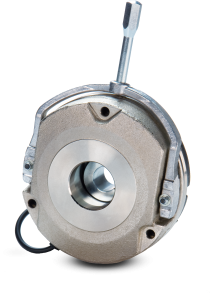
Consider COMBISTOP when replacing a brake that:
• Provides fail-safe stopping or holding
• Is used on a vertical or suspended load
• Operates frequently
• Requires multiple torque and mounting configurations
• Needs options such as manual release or microswitches
COMBIPERM P1 Permanent Magnet Brakes
COMBIPERM P1 brakes use permanent magnets to provide power-off braking and are designed for applications where compact dimensions and precise holding are important. Their backlash-free design makes them particularly relevant for servo-driven motion systems, robotics, and other applications where positioning is important.

Consider COMBIPERM P1 when the existing brake:
• Is a compact permanent magnet brake
• Is mounted to a servo motor
• Requires backlash-free holding
• Has limited installation space
• Requires high torque in a compact package
COMBINORM Brakes and Clutches
COMBINORM products use electromagnetic actuation for power-on braking and clutching applications. COMBINORM brakes can be used where braking is initiated by applying electrical power, while COMBINORM clutches engage to transfer torque between driving and driven components.

Consider COMBINORM when replacing an existing:
• Power-on electromagnetic brake
• Electromagnetic clutch
• Shaft- or flange-mounted component
• Component used for controlled mechanical cycling
COMBIBOX Clutch-Brake Units
Some machines require both clutching and braking functions. KEB COMBIBOX units combine these functions into a single assembly, making them suitable for applications such as indexing and intermittent motion.

Consider COMBIBOX when the existing component:
• Combines clutch and brake functions
• Is used for repeated indexing or cycling
• Requires an enclosed assembly
• Operates in an environment where additional protection may be needed
Choose Based on the Application
The machine itself can provide important clues about which replacement technology is appropriate.

The application should also be considered when replacing an older component with a different technology. For example, a machine that originally used a spring-applied brake may require that same fail-safe operating principle because the brake is responsible for holding a vertical load. A compact permanent magnet brake may be an excellent solution for a servo axis, but it should not automatically be substituted for a spring-applied brake without evaluating the machine’s safety requirements.
The best replacement is the one that meets the current application requirements, not necessarily the one that most closely resembles the original component.
When an Exact Replacement Isn’t Available
Sometimes the original brake or clutch is obsolete, discontinued, or no longer available in the required configuration. In other cases, the original component may have been selected for a machine that now operates differently.
This creates an opportunity to evaluate whether the replacement should simply replicate the original design or improve upon it.
For example, a machine may now operate at a higher cycle rate, require faster stopping, or have less available installation space after a redesign. The replacement may therefore need a different torque rating, mounting arrangement, voltage, or configuration.
KEB offers a variety of options and configurations for its brake and clutch products, allowing engineers to consider the mechanical and electrical requirements of the current machine rather than being limited to an obsolete component.
Instead of asking only:
“What part replaces this model?”
also ask:
“What brake or clutch provides the required function and fits the machine as it operates today?”
This distinction can help prevent replacing an old component with another component that carries the same limitations.

Find the Right Replacement With KEB America
Replacing a brake or clutch is an opportunity to evaluate more than the original component. By considering the brake or clutch’s function, specifications, and application requirements, engineers can select a replacement that fits the machine and meets its current performance needs.
KEB America offers a wide range of brakes and clutches for industrial applications, from spring-applied and permanent magnet brakes to electromagnetic clutches and clutch-brake assemblies. Explore KEB’s brake and clutch solutions or contact our team to find the right solution for your application.
Related Articles




Let's Work Together
Connect with us today to learn more about our industrial automation solutions and how to commission them for your application.
"*" indicates required fields