
KEB’s Marine-Certified F6 VFD Brings Flexible Drive Technology to Marine Electrification
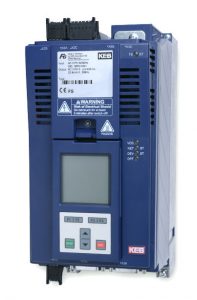
Marine electrification is changing the way vessels are designed, powered and operated. KEB’s marine-certified F6 VFD gives shipbuilders, system integrators and vessel operators a flexible drive platform for electric propulsion, hybrid powertrains, onboard electrical systems and auxiliary equipment.
The marine industry is moving steadily toward electrification. Battery-electric vessels, hybrid propulsion systems, shore-power connections and increasingly sophisticated onboard electrical networks are creating new opportunities—and new engineering challenges.


For a variable frequency drive (VFD), operating on a vessel is about more than controlling a motor. Equipment must withstand demanding environmental conditions, meet applicable marine requirements and integrate reliably into the vessel’s electrical and automation architecture.
KEB’s COMBIVERT F6 VFD is now available with marine certification, bringing the flexibility of the F6 platform to a growing range of marine applications.
The F6 platform offers a broad power range, multiple motor-control technologies, flexible communications and several cooling configurations, providing engineers with options for designing compact and application-specific systems.
Why Marine Electrification Needs Flexible VFD Technology
Marine electrification encompasses a wide range of vessel architectures. A fully electric boat may use batteries to supply a DC bus, which then feeds drives and electric propulsion motors. A hybrid vessel may combine batteries, generators, diesel engines and electric motors. Other vessels may use electrical power for pumps, compressors, winches, lifts, ventilation or other auxiliary equipment.
The common element is the need to efficiently convert and control electrical energy.
KEB’s experience in marine applications has identified three key areas for drive technology:
• Marine electrification for new vessels and retrofit projects
• Turbo-machinery applications, including high-speed equipment and Boil-Off Gas (BOG) management
• Auxiliary marine equipment, including pumps, compressors, lifts, winches, and other electrically driven machinery
The F6 can play a role across these applications, from individual motor control to integration within a larger electrical system.

Electric Propulsion for New Builds and Retrofits
Electric propulsion is one of the most visible applications of marine electrification.
A typical system may include a battery or generator, DC bus, inverter, electric motor and propeller. The VFD provides the critical interface between the electrical system and the propulsion motor, controlling speed and torque according to the vessel’s operating requirements.
Motor technology can vary according to the application. Induction, permanent-magnet, synchronous and synchronous-reluctance motors can all be considered for marine propulsion and auxiliary systems. The F6 supports a range of motor technologies and control methods, providing flexibility when selecting the motor and overall propulsion architecture.
KEB’s marine experience includes systems operating on vessels, with power levels ranging from approximately 50 to 200 kW.

Supporting Hybrid Propulsion Architectures
Hybrid vessels typically fall into two major propulsion architectures: parallel hybrid and series hybrid.
In a parallel hybrid system, the diesel engine and electric motor are mechanically connected to the same propeller shaft. Depending on operating conditions, the vessel can operate using diesel power, electric power or both.
This provides flexibility and redundancy, but the mechanical connection between the diesel engine and electric motor introduces additional components such as gearboxes and clutches. The propeller also represents a compromise between the requirements of the combustion engine and the electric motor.
A series hybrid takes a different approach. The electric motor is always responsible for propulsion, while the diesel engine drives a generator. Electrical energy then flows through the generator, battery and/or DC bus to the propulsion inverter and motor.
This architecture allows the propeller to be optimized specifically for electric propulsion. The diesel generator can also operate closer to a preferred operating point rather than responding directly to every change in propeller load.
For ferries, workboats and vessels operating in environmentally sensitive areas, the smooth and quiet operation of electric propulsion can be an important advantage.
Battery Charging, Shore Power and Generator Integration
As vessels become more electrified, the interfaces between energy sources become increasingly important.
Battery-electric and hybrid vessels may need to connect batteries with shore power, onboard generators and the vessel’s DC bus. These interfaces must manage power flow while maintaining stable operation of the electrical network.
KEB’s F6 variants are also suited for these applications, including the F6 Active Interface Converter (AIC) and the forthcoming F6 Mains Monitoring Module (MMM).
The AIC concept is particularly relevant where bidirectional power flow, active harmonic compensation and dynamic energy management are required.
Marine Certification: Designed for the Environment
Marine electrical equipment faces environmental and electrical conditions that differ significantly from many land-based industrial installations. Vibration, temperature, humidity, EMC, insulation and power-quality requirements all have to be considered when equipment is installed onboard a vessel.
KEB’s marine-certified F6 configurations address these types of requirements and provide classification options associated with major marine certification bodies, including DNV, ABS, Bureau Veritas, and Lloyd’s Register.

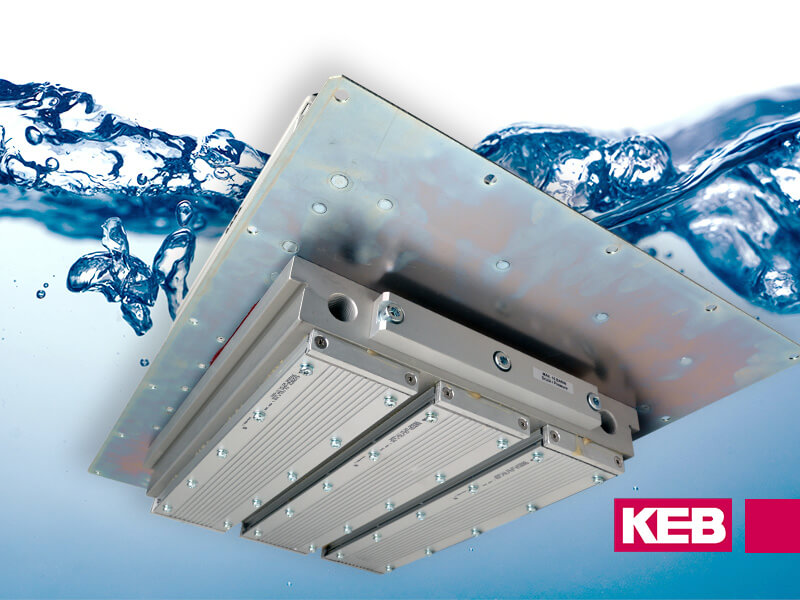
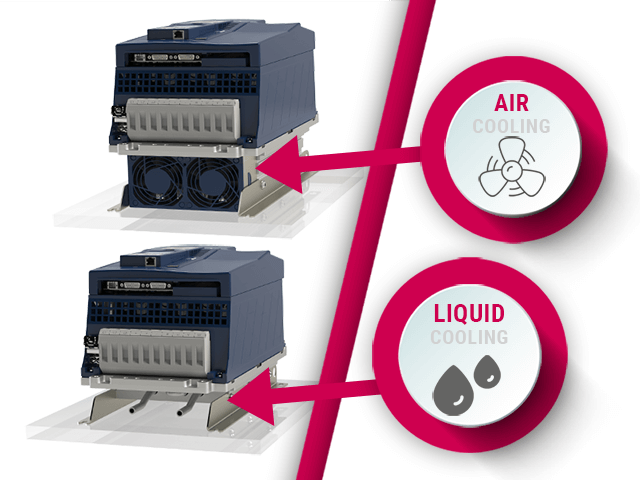
The F6 platform also offers multiple installation and cooling configurations. Depending on the application, engineers can select air-cooled or liquid-cooled designs, including through-mount configurations that can help manage heat within a constrained marine equipment space. The F6 has multiple cooling configurations for applications where enclosure space, ambient conditions and heat management are important design considerations.
For inland vessels operating in Europe, additional requirements such as ES-TRIN must also be considered. These requirements address areas including electrical safety, EMC, insulation, protection and equipment installation.
Beyond Propulsion: Auxiliary Marine Applications
Vessel electrification isn’t limited to propulsion.
A growing number of onboard systems are being electrified, creating opportunities for VFD technology in applications such as:
• Water pumps
• Compressors
• Lifting equipment
• Winches
• Fans
• Wing-sail drives
• Other auxiliary machinery
These applications can benefit from variable-speed operation, precise motor control and integration with vessel automation systems.
One VFD Platform for a Changing Marine Market
The future of marine electrification will not be defined by a single vessel architecture.
Some vessels will be fully electric. Others will use parallel or series hybrid systems. Still others will retain conventional propulsion while electrifying more of their onboard auxiliary equipment.
What these vessels share is the need for reliable, flexible power conversion and motor control.

With the marine-certified F6 VFD, KEB is extending its drive technology into this evolving market with a platform that combines flexible motor control, multiple communications options, high-power capability and configurable cooling solutions.
For shipyards, vessel owners, naval architects and marine system integrators, this provides a foundation for developing the next generation of electric and hybrid vessels.
From propulsion and power conversion to auxiliary equipment and turbo-machinery, KEB’s marine-certified F6 is built to help turn marine electrification concepts into practical systems.
Ready to Explore a Marine Electrification Project?
Whether you’re designing a new electric vessel, developing a hybrid propulsion system, retrofitting an existing boat or looking for a drive solution for marine auxiliary equipment, KEB can work with your engineering team to evaluate the application.
Contact KEB to discuss your next marine electrification project.
Related Articles


Let's Work Together
Connect with us today to learn more about our industrial automation solutions and how to commission them for your application.
"*" indicates required fields