
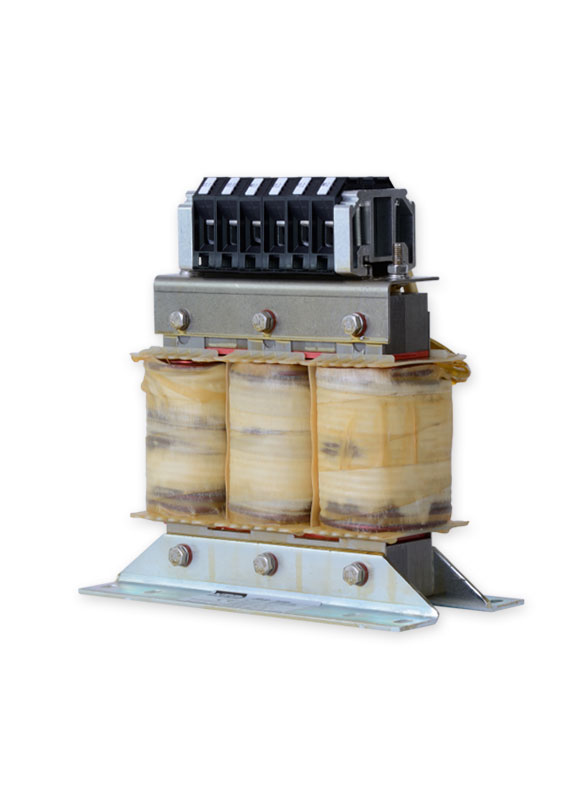
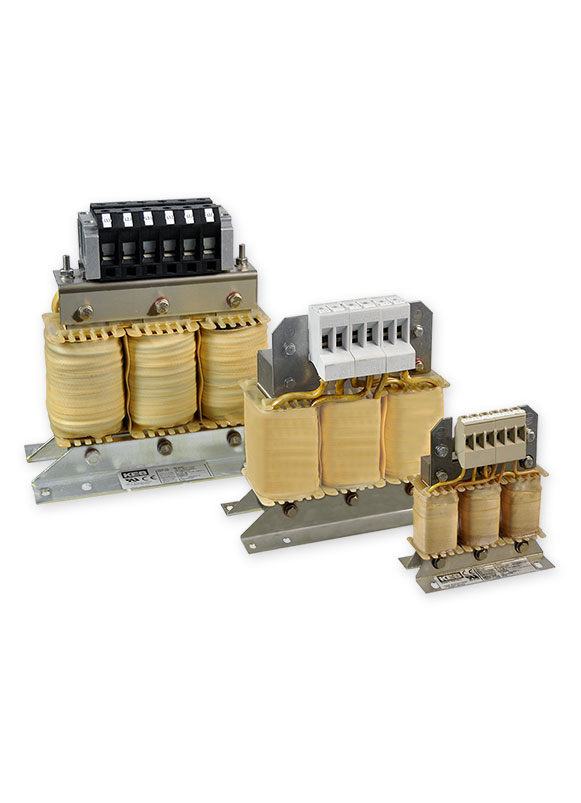
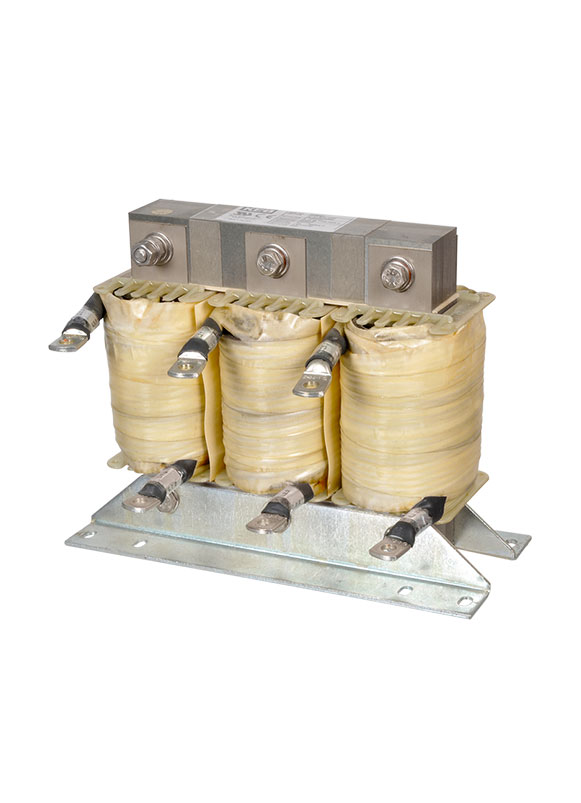
Line reactors for VFD protection—also known as input reactors—help reduce harmonic distortion while increasing the lifetimes of components, which in turn protects product investment and reduces downtime. KEB provides both: chokes for input impedance and load reactors that help reduce dV/dT switching peaks while increasing motor life.
Filters and Chokes
Line Reactors
Product Details
We offer a full range of AC line reactors for both 230V and 460V applications, so you can pair your new reactor with your drive’s voltage class without custom lead times.
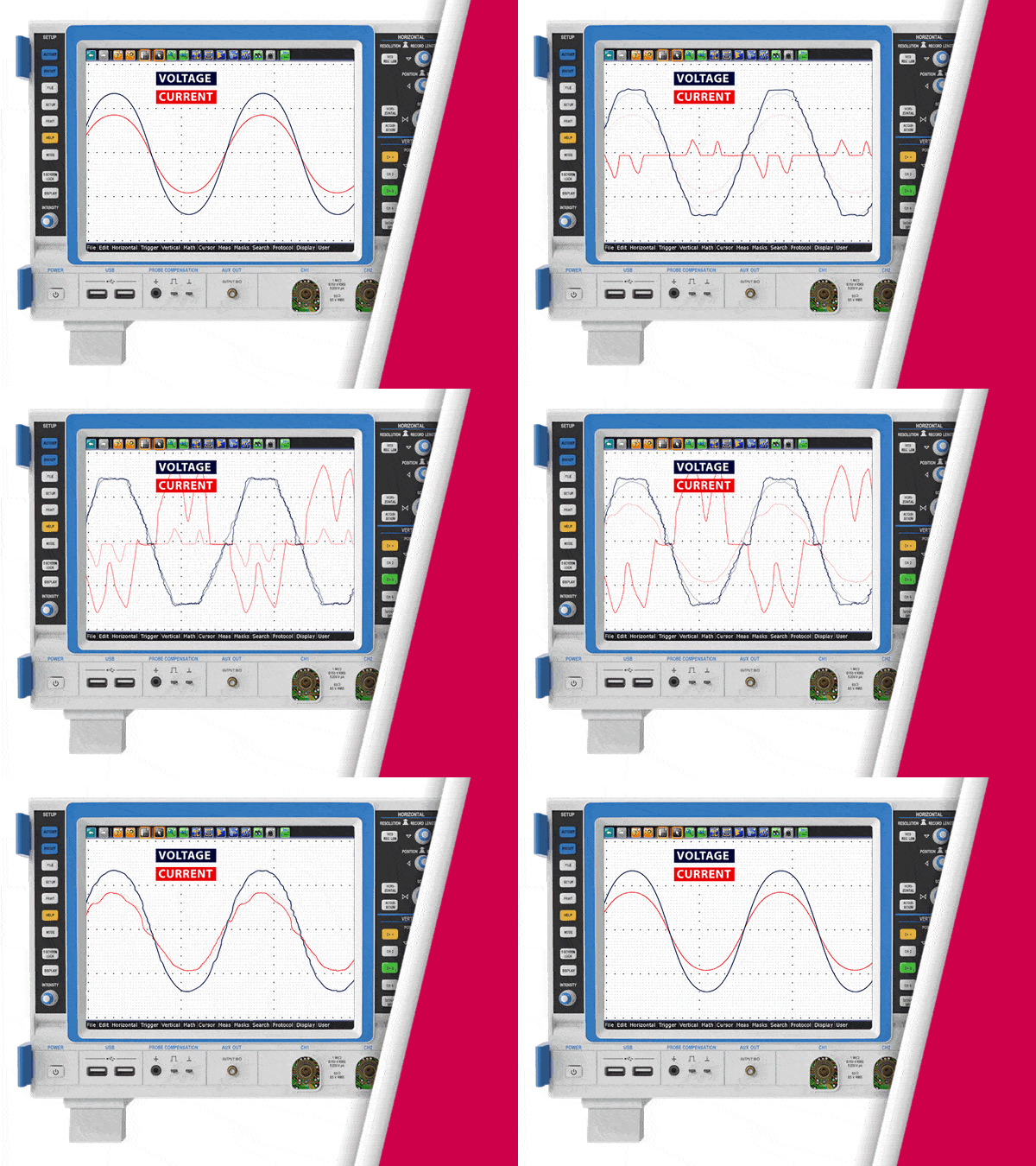
• Improve system performance. Line reactors lower peak charging currents, reduce harmonic distortion, and minimize ripple current on the DC bus.
• Load reactors minimize the negative effects of a VFD’s PWM voltage spikes. This ultimately increases motor operating lifetime, preventing unnecessary costs and the downtime of having to replace a motor.
• Various impedances offered including 3% and 5%.
• Robust overloads for demanding VFD applications.
Tech Specs
Electrical
• Voltage Class: 230V and 460V
• Rated Frequency: 50 and 60Hz versions available
• Overload Rating: 150-200% FLA for 60 seconds
• Impedance: 3% and 5% available
Certifications
• cULus or UL recognized
• CE
Environment
• Protection Type: IP20 standard (IP54 enclosed optional)
• Rated Ambient Temperature: Up to 40° C with possible derate
• Elevation: 2,000 meters with possible derate above
Options
Line Choke: A line reactor is placed at the input side of a VFD. The added impedance improves the drive’s harmonic current distortion level.
Motor Choke: A motor reactor is placed at the output of a VFD. It reduces the dV/dt levels of the PWM switching and increases motor operating lifetime.
dV/dt Motor Chokes: Specially designed dV/dt motor chokes are available for installations where the motor is mounted a significant distance away from the VFD (> 40 feet).
KEB dV/dt chokes are capable of being used with up to 16kHz switching frequency and have low inductances for use with PM servo motors.
Not sure whether you need input or output filtering? Our VFD input and output guide breaks down all five options.
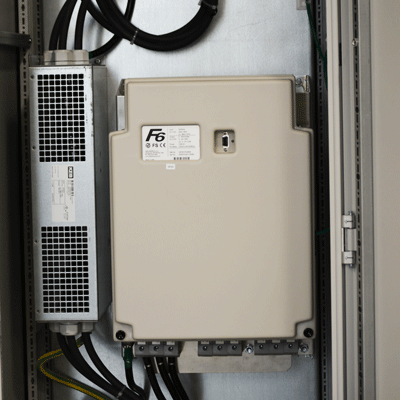
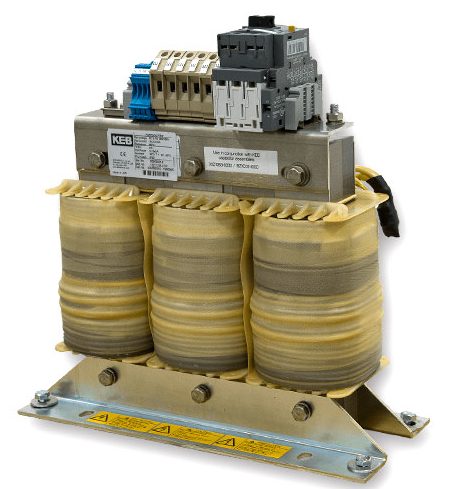
Line Reactor Features
• Relieve supply cables and transformers
• Optimize harmonics of the mains power supply
• Protect the input rectifier and electrolytic capacitors in the drive controllers and servo drives
• Increase the service life of electrolytic capacitors
• Reduce warranty claims and unplanned downtime from premature drive failure
Not sure which reactor fits your drive? Talk to an application engineer.
FAQs
Do you need a line reactor for VFD?
It’s not mandatory to have a line reactor. However, it’s recommended in cases when your VFD deals with long cable runs, harmonic concerns, and other sensitive equipment setups.
What is a 3% line reactor?
A 3% line reactor adds impedance equal to 3% of your drive’s rated current. In other words, it slightly resists and smooths the flow of electricity. This reduces harmonic distortion that VFD systems may generate.
Is a 3% or 5% line reactor better?
It depends on the application. If you have a standard setup, you’ll be satisfied with 3%. That said, 5% offers stronger harmonic mitigation to meet the IEEE 519 standard.
How to size a line reactor for a VFD?
Your voltage class, HP, and FLA rating determine the size of your line reactor for a VFD. You can check your drive’s nameplate or catalog for these specs.
Does a line reactor go before or after a VFD?
Line reactors go before the VFD. They’re installed between the VFD and the power source.
Contact Us
Let's Work Together
Connect with us today to learn more about our industrial automation solutions and how to commission them for your application.
"*" indicates required fields
Let's Talk
KEB has helped our customers solve many automation challenges. Let’s discuss your challenges and goals and see how we can help.